
About
Your Past Does Not Have to Determine Your Future
If there is one thing my life has taught me, it is that where you are today does not have to determine where you go next. I know that not because I read it in a book, but because I have lived it.
I've experienced disability, addiction and recovery. I've rebuilt my life in a new country, become a mother, run marathons and ultramarathons, built successful businesses, trained with some of the world's leading personal development teachers and immersed myself in understanding how our thinking and decisions shape the results we create.
Today, that journey has led me to my work in financial wellbeing, because I believe financial wellbeing is about far more than money. It's about having the freedom, choice and opportunity to become the fullest expression of who you are.
But it took me a long time to understand that.
Learning That Our Circumstances Don't Define Us
My story almost ended two days after it began. I was born healthy, but shortly afterwards I became critically ill. My heart stopped, I suffered convulsions and my brain was deprived of oxygen. Doctors told my parents I probably wouldn't survive. My dad was allowed to take just two photographs of me because they didn't think I'd make it.
Against the odds, I did.
The lack of oxygen affected me physically, leaving me with brain damage and some weakness on the right side of my body. My parents were told that I might never even be able to ride a bike. But growing up, it never really occurred to me that I should expect less from life because of what had happened to me.
When my family moved to the United States, I joined our neighbourhood swim team. Swimming didn't come naturally to me. Some strokes were difficult because my body simply didn't move in the same way as everyone else's. I worked hard and still got disqualified. I trained week after week and was never one of the fastest swimmers. But I kept showing up.
I couldn't have known it then, but swimming was teaching me one of the most important lessons of my life. Progress isn't always immediate, and effort doesn't always produce the result we want straight away. Sometimes we can work incredibly hard and still feel as though we're getting nowhere. What matters is our willingness to keep moving forward.
Years later, I would need that lesson more than I could possibly have imagined.
When I Couldn't See a Future
As a young adult, I experimented with drugs and alcohol. When I was 19, needed surgery. During my recovery, I was prescribed Percocet for the pain. When the prescription ended, I found myself wanting more, and what began with prescription painkillers gradually developed into addiction.
Shortly before my twenty-first birthday, I reached a point where I knew something had to change. I got clean and sober and returned to university. For the next three years, I immersed myself in my studies and graduated with a degree in Government and International Politics. For a while, it felt as though I had begun building a completely different future.
But recovery wasn't a straight line.
After returning to the UK, I became caught in a five-year addiction to crack cocaine and heroin. I tried to stop many times. I went to rehab, experienced periods of sobriety and relapsed hundreds of times. Eventually, I stopped believing a different future was possible for me.
I remember sitting in recovery meetings, watching other people rebuild their lives and thinking, “I don't think this is possible for me.” My world had become incredibly small. My days revolved around finding the next £10 note. I wasn't thinking about purpose, potential, financial security or the future. I was thinking about surviving the next few hours.
Eventually, I reached such a desperate place that I attempted to take my own life. Surviving that experience became another turning point. I didn't suddenly know how to fix everything, and I certainly didn't have a grand vision for my future. I simply became willing to believe that perhaps another life was possible, even though I couldn't see it yet.
Looking back, I think that's often where meaningful change begins. Not with knowing exactly how you're going to reach the destination, but with making the decision that where you are now isn't where you're going to stay.
Creating a New Life
In 2007, I moved to New Zealand on a working holiday visa. Getting on that plane became one of the most important decisions of my life.
For the first time in years, I was somewhere that wasn't defined by my past. I had an opportunity to make different choices, build different relationships and begin creating a different future. While I was there, I met my husband, Fred, and together we built a life and became parents to our two sons.
After our second son, Finn, was born in 2011, I decided I wanted to regain my fitness. I started by walking in the evenings, pushing Finn in the buggy while our older son came along on his scooter. Week after week, I became stronger, and eventually I began wondering whether I might be able to run.
On 1 January 2012, I went for my first run. I couldn't run the whole way, so I ran for a while, walked and then ran again. I kept going, and within six weeks I could run seven and a half kilometres without stopping. Then another thought entered my mind: what if I could run a marathon?
That November, I crossed the finish line of the Auckland Marathon. In the years that followed, I completed several more marathons, a 50km race and eventually a 100-kilometre ultramarathon.
Sometimes I think about the little girl whose parents had been told she might never even ride a bike. She eventually ran 100 kilometres.
That experience reinforced something I was beginning to understand about every area of life. What we believe is possible influences the decisions we make. Our decisions influence the actions we take, and those actions, repeated over time, can create an entirely different future.
Understanding How Change Really Happens
By 2018, I had started a business in personal development. That journey introduced me to the work of Bob Proctor, and for the first time I began to understand intellectually what I had experienced throughout my own life.
I could see the connection between the thoughts I was repeatedly thinking, the decisions I was making, the actions I was taking and the results I was creating. Looking back over my life, so many things began to make sense. I realised that our circumstances certainly influence us, but they don't have to dictate what happens next.
I also learned that understanding these ideas and actually living them are two very different things. It's one thing to know intellectually that your thinking needs to change. It's another thing entirely to make different decisions and take different actions when your old patterns are pulling you in the opposite direction.
So I committed myself to applying what I was learning, rather than simply studying it. As my thinking changed, I made different decisions. Those decisions changed my actions, and my actions began changing my results. Within eighteen months of working with Bob, my business was generating almost $250,000 in annual revenue.
The financial result was significant, but what fascinated me even more was how the change had happened. I wanted to understand why some people are able to create extraordinary changes in their lives while others can know exactly what they should do and still struggle to do it. That question became central to my work.
Turning Experience Into Expertise
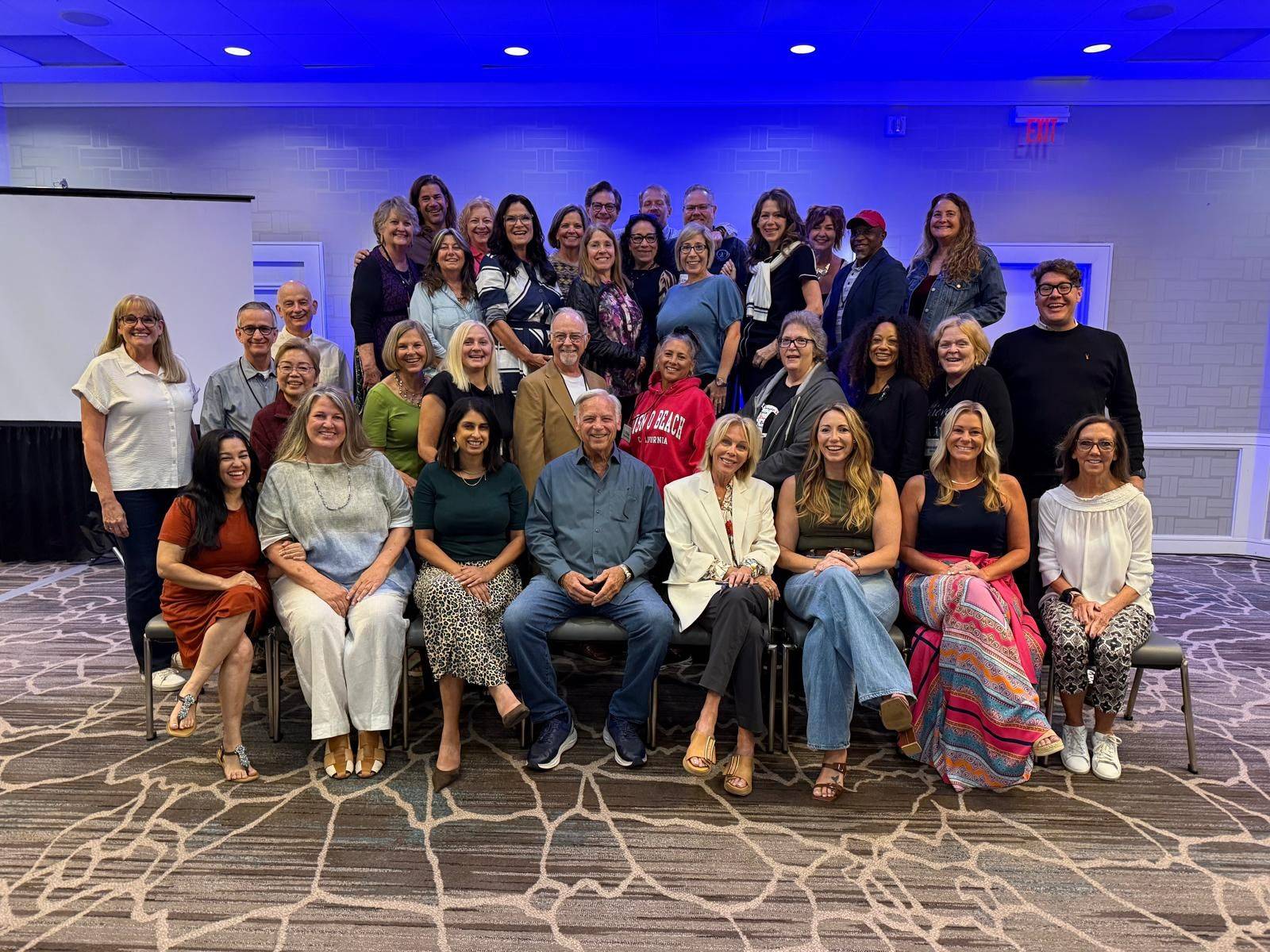
Discovering Bob Proctor's work eventually led me to another teacher who would have a profound influence on my life, Jack Canfield. In 2020, I began training with Jack and became a Certified Success Principles Trainer.
Since then, I've had the privilege of assisting and coaching at Jack's Breakthrough to Success events, supporting people from around the world as they challenge old ways of thinking, make courageous decisions and create meaningful change in their lives.
Today, I'm also a member of the Success Principles Leadership Council, continuing to deepen my work around the principles that have shaped so much of my own life and the work I now do with others.
I've also continued exploring these questions through my work in financial wellbeing, including commissioning research with Newcastle University into financial wellbeing and financial behaviour.
The more I've studied personal development, success, behaviour and financial wellbeing, the clearer something has become to me: money is rarely just about money.
The financial decisions we make are connected to how we think, what we believe is possible for ourselves, the habits we've developed, the choices we make and the future we believe we're capable of creating.
That's why my work today goes much deeper than simply helping people accumulate more money.
Why Financial Wellbeing Matters
There was a time in my life when £10 represented survival. Every decision revolved around finding the next £10, and my world had become so small that thinking about the future felt almost impossible.
Today, money represents something very different to me. It represents choice.
Money gives us choices about how we look after our health, how we spend our time and who we spend it with. It allows us to invest in our growth, contribute to causes that matter to us and create experiences that make our lives meaningful. It can give us greater freedom to make decisions based on the life we want to create rather than simply responding to the circumstances in front of us.
That's why I believe financial wellbeing is one of the foundations that gives us the freedom, choice and opportunity to become the fullest expression of who we are.
Everything I've experienced — disability, addiction, recovery, motherhood, running, entrepreneurship, personal development and my work in financial wellbeing — has ultimately brought me here. My mission is to help people create better futures through personal development, intentional decision-making and financial wellbeing.
Your future isn't predetermined by what has happened to you. It isn't dictated by mistakes you've made, circumstances you've inherited or even the results you're experiencing today.
Our future isn't simply something that happens to us. It's something we participate in creating, and sometimes, creating a completely different future begins with one intentional decision.